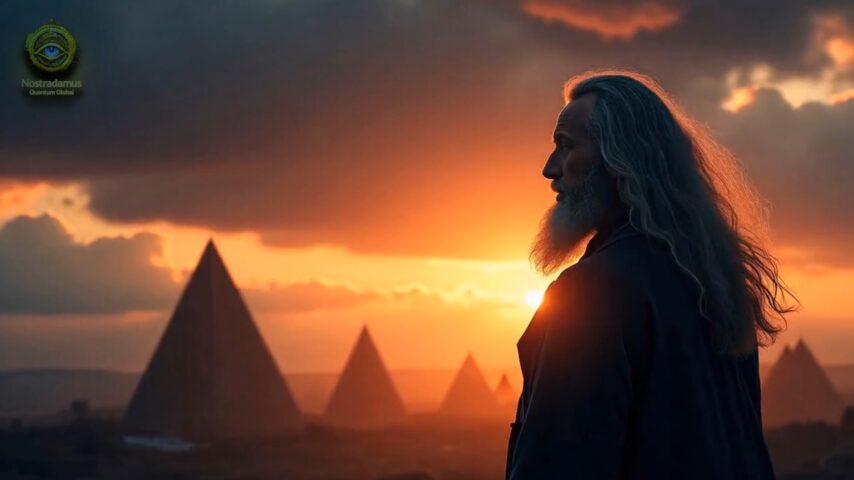
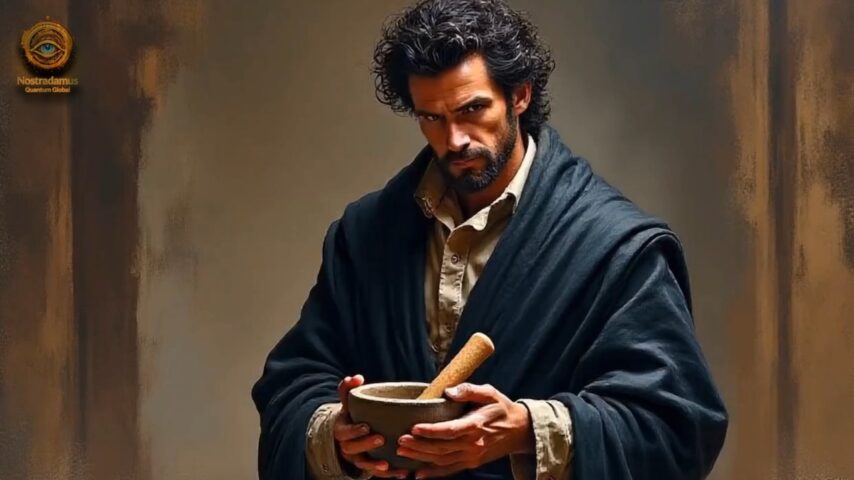
Michel de Nostredame, known worldwide as Nostradamus, was an enigmatic 16th-century French apothecary and astrologer. His quatrains, written in a cryptic and symbolic language, have captivated humanity for centuries. They have been the subject of countless interpretations and debates.
The fascination with his writings lies in their apparent ability to predict future events. However, the ambiguous nature of his prophecies allows for subjective and often retrospective interpretation. This has fueled both fervent belief and profound skepticism.
We delve into the concept of quantum prophecies, a perspective that acknowledges multiple possibilities and scenarios. The future is not a fixed line, but a spectrum of potentials that manifest according to our actions. This approach allows us to analyze Nostradamus's predictions not as inescapable destinies, but as warnings or turning points.
Our analysis will focus on a specific and crucial period, from December 12, 2025, to December 12, 2030. This five-year period is shaping up to be one of intense transformation and potential global instability. It is a timeframe in which human decisions could tip the scales toward different realities.
Nostradamus's prophecies, in essence, often focus on catastrophic events and major transformations. While his language is metaphorical, the recurrence of themes such as wars, disasters, and power shifts is undeniable. Projecting these warnings into the near future compels us to consider a global context of increasing complexity.
We are witnessing an intensification of geopolitical tensions in various regions of the world. Traditional alliances are being reconfigured, and new powers are emerging with challenging ambitions. This raises the risk of regional conflicts, which could quickly escalate into larger-scale confrontations.
Global economic instability is a constant concern, with cycles of inflation, recession, and financial crises. Global supply chains are fragile, and sovereign debt is reaching unprecedented levels. These factors create fertile ground for social unrest.
The exacerbation of climate change and the scarcity of vital resources such as water and food add another layer of complexity. These environmental challenges not only threaten sustainability but also generate widespread social unrest. Competition for limited resources can trigger further conflicts.
All of this contributes to an increase in mass migrations, driven by conflicts, economic crises, and climate disasters. These population movements place additional pressure on the infrastructure and social systems of receiving countries. The result is a landscape of fragile interconnectedness and growing vulnerability.
The period from 2025 to 2026 is shaping up to be a year of great uncertainty worldwide. Traditional structures are faltering, and predictability is drastically decreasing. Volatility will be the norm, affecting all aspects of human life.
Disruptive technological advances, especially in artificial intelligence and biotechnology, will reach a tipping point. These innovations will generate both unprecedented opportunities and existential risks. The ethics and regulation of these technologies will be topics of urgent debate.
The rise of new powers and the reconfiguration of alliances will challenge the established world order. Unipolar hegemony is fading, giving way to a more complex and less predictable multipolar system. Tensions between ideological and economic blocs will intensify.
Recurring financial instability will be a feature of this two-year period. Markets will experience extreme fluctuations, and national economies will face significant pressures. Speculative bubbles could burst, triggering debt crises and unemployment.
Furthermore, the recurrence of food crises will become more evident in various regions. Climate change, conflict, and disruptions in supply chains will affect food production and distribution. This will exacerbate poverty and hunger, especially in the most vulnerable nations.
Between 2027 and 2028, we could witness a global awakening. Faced with the magnitude of the challenges, a significant portion of humanity may reassess its priorities. Collective solutions and a paradigm shift will be sought.
There will be a greater focus on sustainability, social justice, and spirituality. Citizen movements will gain strength, demanding a more equitable development model that respects Mother Earth. The search for a purpose beyond materialism will intensify.
The presence of significant social movements will be a constant during this period. Protests and demands for change will spread throughout the world. People will demand greater accountability from their leaders and more active participation in decision-making.
Profound changes will be demanded in existing power structures, both political and economic. Citizens will seek to dismantle systems perceived as unjust or corrupt. Pressure for more transparent and representative governance will increase.
In this scenario, science and technology could offer innovative solutions to environmental challenges. Significant resources will be invested in renewable energy, carbon capture technologies, and sustainable agricultural methods. International scientific collaboration will be strengthened.
The two-year period from 2029 to 2030 represents a crucial turning point for humanity. The decisions made during this time will determine the long-term future. It is a threshold where diverging paths will become clearer.
International cooperation will be absolutely crucial to addressing global challenges. Nations will need to overcome their differences and work together to mitigate climate change, prevent conflict, and promote economic stability. Multilateralism will be put to the test.
Adapting to climate change will become an unavoidable priority. Communities and governments will need to implement robust measures to protect themselves from extreme weather events. Resilience will become an essential quality for survival.
New, more decentralized and participatory forms of governance could emerge. Traditional nation-state models could evolve to accommodate more influential transnational or local structures. Technology could facilitate new forms of democracy.
Furthermore, more sustainable and equitable economic models could emerge. A circular economy will be pursued, minimizing waste and maximizing resource efficiency. Wealth redistribution and inequality reduction will be key objectives.
However, the possibility of large-scale conflicts and devastating natural disasters remains a persistent shadow. If collaboration fails and poor decisions prevail, these apocalyptic scenarios could materialize. The future hangs by a thread.
Nostradamus's prophecies are, by their very nature, ambiguous and subject to multiple interpretations. They are not immutable pronouncements, but rather echoes of possible futures. Their value lies in the reflection they provoke, not in unshakeable certainty.
The future, from a quantum perspective, is not predetermined. It doesn't exist as a single, unchangeable line that we simply expect to reach. Rather, it exists as a superposition of possibilities, a vast field of potentials that coexist simultaneously.
Our actions and decisions, both individual and collective, directly influence the likelihood of certain scenarios unfolding. Every choice we make, every path we take, collapses the wave function of reality, tipping the scales toward one possibility or another. This means we are not merely passive spectators of a predetermined fate.
We are, in essence, co-creators of our future reality. The awareness of this capacity grants us immense responsibility. Nostradamus's ambiguity invites us to caution and critical analysis.
He urges us not to succumb to fatalism, but to recognize human potential. His warnings are a call to action, not a condemnation. The period from December 12, 2025, to December 12, 2030, is shaping up to be a time of great turbulence and transformation.
Global forces are in motion, and humanity stands at a historic crossroads. The challenges are immense, but so are the opportunities. The key to navigating this uncertain future lies in awareness, collaboration, and adaptation.
We must be aware of the risks, but also of our power to influence the outcomes. International cooperation is essential to addressing problems that transcend borders. The capacity for adaptation, both individually and socially, will be fundamental for survival and progress.
Those who can adapt to change and learn from crises will be the ones who thrive. Rigidity in the face of adversity will only lead to collapse. Nostradamus's legacy, beyond speculation about specific events, lies in the importance of reflection, foresight, and responsibility.
His quatrains remind us that the future is not an unfathomable mystery, but a blank canvas that we are painting with every decision. It is a call to action, to preparation, and to the conscious construction of the future we desire. The choice is ours.
Michel de Nostredame, known worldwide as Nostradamus, was an enigmatic 16th-century French seer and astrologer. His quatrains, written in an eclectic and symbolic language, have captivated humanity for centuries. They have been the subject of countless interpretations and debates.
The fascination with his writings lies in their apparent ability to predict future events. However, the ambiguous nature of his prophecies allows for subjective and often retrospective interpretation. This has fueled both fervent belief and profound skepticism.
We delve into the concept of quantum prophecies. A perspective that acknowledges multiple possibilities and scenarios. The future is not a fixed line, but a spectrum of potentials that manifest according to our actions.
This approach allows us to analyze Nostradamus's predictions not as inescapable fates, but as warnings or turning points. Our analysis will focus on a specific and crucial period: from December 12, 2025, to December 12, 2030.
This five-year period is shaping up to be one of intense transformation and potential global instability. It is a timeframe in which human decisions could tip the scales toward different realities.