TRAILER
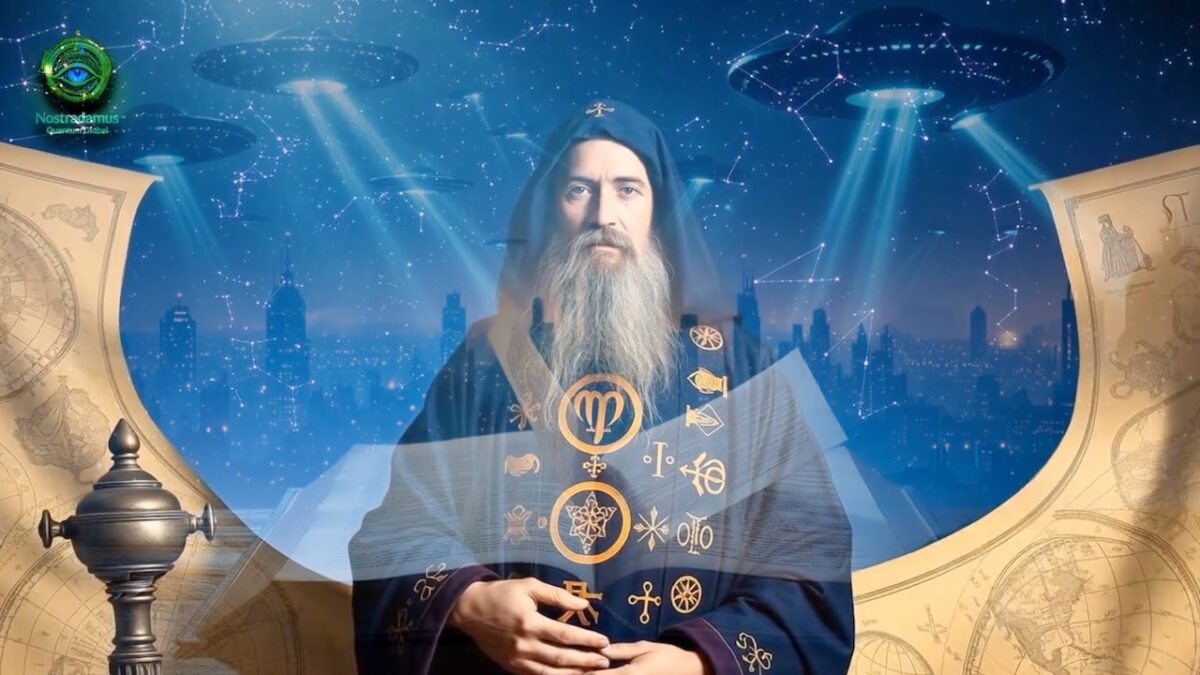
The hidden truth of Nostradamus.
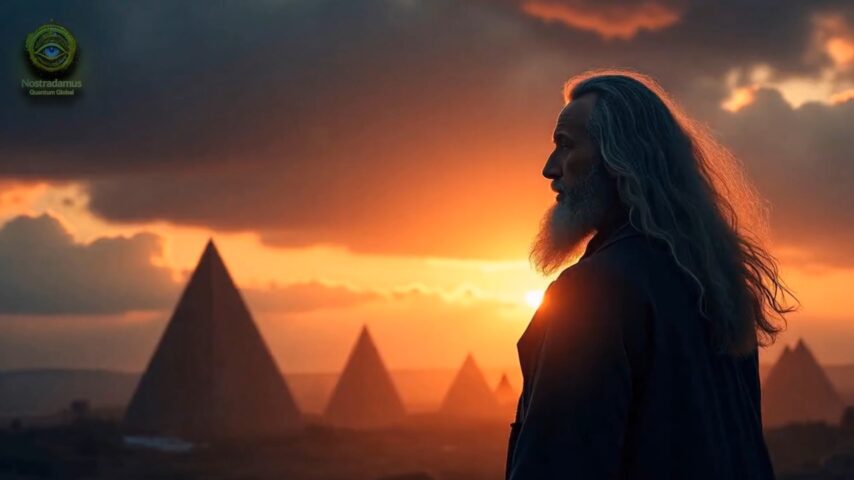
Nostradamus has always been a figure shrouded in mystery and controversy. Many wonder if his prophecies are merely creative interpretations or if he truly possessed a vision of the future.
This enigma has captivated the imagination of entire generations, keeping it at the center of passionate debates. Nostradamus, whose real name was Michel de Notre-Dame, was a 16th-century French physician and astrologer. Famous for his prophetic quatrains, he has been the subject of countless studies and interpretations.
His supposed ability to predict the future has made him an enigmatic figure.
Among his most famous prophecies are alleged references to the French Revolution, the rise of Hitler, and the 19th-century bombings. While many of these connections were established after the fact, they have contributed to the fascination that his work continues to inspire.
His legacy endures, inspiring both admiration and skepticism.
Nostradamus's prophecies are set within a turbulent historical context, marked by wars and political upheaval. In this era of uncertainty, his writings offered both solace and, often, warnings. This climate of instability undoubtedly influenced his vision of the future, reflecting the anxieties of his time.
Nostradamus is famous for his enigmatic and ambiguous language.
His quatrains, rich in symbols and metaphors, lend themselves to multiple interpretations, giving rise to diverse readings throughout the centuries. This ambiguity has played a crucial role in maintaining interest in his prophecies, allowing each generation to adapt them to its own reality.
Nostradamus has been the subject of numerous interpretations that have shaped his reputation as a prophet.
His writings, with their ambiguous language, allow each generation to adapt them to their own context.
This ambiguity has led some to question whether his predictions are authentic or simply later reinterpretations of past events.
Over the centuries, some critics have pointed out that Nostradamus's prophecies did not come to pass. These failures call into question the veracity of his visions and suggest that perhaps his successes were due to chance rather than a supernatural vision of the future.
Historical coincidences have played a crucial role in the mystery surrounding Nostradamus.
His followers claim that his prophecies have come true in astonishing ways, while skeptics insist that these coincidences are simply the product of subjective interpretation and the desire to find meaning in his words.
The poetry of Nostradamus
Nostradamus's poetry, rich in symbolism and metaphors, played a crucial role in its prophetic interpretation. This literary style, open to multiple readings, contributed to the diversity of interpretations of his writings and amplified his legacy in popular culture.
Numerous studies have questioned the accuracy of Nostradamus' predictions.
A rigorous analysis of his writings reveals that many of his seemingly accurate predictions were the result of flexible and selective interpretations, rather than a genuine ability to foresee the future.
Critics of Nostradamus argue that his prophecies lack accuracy and are too vague to be considered genuine predictions.
They point out that his quatrains lend themselves to multiple interpretations, allowing for the inclusion of almost any historical event. This fuels skepticism about the authenticity of his prophecies.
The psychology behind the interpretation of prophecies is based on the human desire to find meaning in chaos.
People tend to look for patterns and connections, which leads them to interpret Nostradamus' ambiguities as accurate predictions.
This search for meaning fuels the perpetuation of their myths.
Nostradamus remains a key figure in popular culture, where the line between fiction and reality often blurs.
His prophecies.
His prophecies have been adapted into film, literature, and television, reinforcing his image as a visionary and perpetuating his myth beyond historical facts.
Nostradamus's prophecies retain their relevance thanks to their capacity to be reinterpreted in a modern context. The ambiguity of his writings allows new generations to draw parallels with current events, thus ensuring that his words continue to fuel debate and speculation.
Although many associate Nostradamus with astrology, his connection to this practice is more complex.
While it is true that he employed astrological elements in his predictions, his approach was primarily literary and symbolic. Analysis of this relationship reveals that his work is not limited to astrology, but encompasses a multitude of influences.
The influence of the media in the dissemination of Nostradamus' prophecies has grown over time.
From newspapers to digital platforms, interpretations and reinterpretations go viral, often distorting the original content. This phenomenon reinforces myths and ensures the enduring presence of these writings in the collective imagination.
A historical perspective is essential for analyzing the writings of Nostradamus.
Understanding the context of the 16th century helps to demystify many of his prophecies. His work reflects the concerns of his time, and without this frame of reference, there is a risk of misinterpreting his intentions and attributing erroneous meanings to them.
When comparing Nostradamus with other prophets, important similarities and differences are revealed.
While some share their enigmatic style, others offer more direct perspectives. These comparisons enrich our understanding of their legacy, allowing us to grasp their mutual influences and how each shaped the perception of prophecy.
The religion
Religion played a fundamental role in Nostradamus's prophecies. In an era marked by religious tensions, his writings reflect a syncretism between Christianity and esoteric traditions. This approach allowed him to reach a diverse audience, but it also aroused controversy and distrust in certain circles.
Nostradamus' literary techniques, such as the use of metaphors and enigmatic language, have fascinated scholars for centuries.
These tools allowed him to conceal meanings and evade censorship. His art of intertwining poetry and prophecy is fundamental to understanding the enduring mystery and power of fascination that surrounds his work.
The contemporary fascination with ancient prophecies reflects a relentless search for answers in these uncertain times.
Nostradamus, shrouded in mystery, captivates those who yearn to find meaning in the current chaos. His legacy reminds us of the profound influence that the words of the past can have on the present and the future.
Debunking the most common misconceptions about Nostradamus and the end of the world is fundamental to understanding his true impact.
While his writings are often cited as proof of impending catastrophes, a deeper analysis reveals that his quatrains are more ambiguous than apocalyptic, leaving ample room for subjective interpretation. The influence of war on the interpretation of his prophecies is undeniable.
In times of conflict, his writings served to justify both fears and hopes.
The vague nature of his predictions allowed them to be adapted to the events of war, thus fueling narratives of destruction and redemption. Nostradamus left his mark on film and literature, where his figure became a multifaceted myth.
The creators explored his life and work, blending reality and fiction to captivate audiences, perpetuate his legacy, and fuel debate surrounding his predictions.
Science seeks to explain Nostradamus' prophecies through logic, challenging esoteric interpretations.
Applying a rational approach, he attempts to distinguish myth from reality, rigorously analyzing his texts to better understand the phenomenon that explains his enduring popularity.
The lost texts of Nostradamus.
The lost texts of Nostradamus have fueled theories about as-yet-unknown prophecies. Some believe they contain hidden revelations, while others maintain they never existed. The search for these texts reflects our desire to unravel the mystery, thus perpetuating the enigma surrounding his legacy.
The Forer effect, which refers to the tendency to take vague descriptions literally, is fundamental to understanding the popularity of Nostradamus.
His prophecies, open to multiple interpretations, allow each reader to find personal meaning in them, thus reinforcing the illusion of accuracy in his predictions. The attribution of Nostradamus's prophecies has been questioned, raising the possibility of collaborations or even apocryphal texts.
The lack of tangible evidence about its origin has sparked debates among specialists about the authenticity of certain texts, further complicating the understanding of his prophetic work.
Nostradamus' medical training influenced his writings, giving them an observational approach.
This scientific background probably enriched his symbolic language, allowing him to establish links between natural and social events in his prophecies.
His knowledge gave him a unique perspective, merging science and mysticism in his quatrains.
Nostradamus' predictions for the 21st century are the subject of much speculation and reinterpretation.
Some believe that his writings relate to current events, while others consider these parallels forced.
His work continues to reflect our contemporary concerns and remains entirely relevant.
Critical analysis of the prophecies reveals a text rich in ambiguities, open to multiple interpretations. Nostradamus employs poetic language that allows for a wide range of meanings, thus contributing to its enduring relevance and the fascination it continues to inspire today.
The semantics of fear is a recurring element in the prophecies of Nostradamus.
His writings evoke apocalyptic scenarios that resonate with collective anxieties, leading to the interpretation of his quatrains as warnings about the future, and thus giving them a relevance that endures through the centuries.
Deciphering the symbolism of Nostradamus' quatrains represents a constant challenge for researchers.
His references to animals, stars, and natural phenomena are laden with hidden meanings that require a deep understanding of the historical and cultural context to be fully grasped. Nostradamus associated with many false prophets of his time, which tested his credibility. However, his talent for weaving complex metaphors and his reputation as a physician and astrologer granted him a unique place that distinguished him from other contemporary seers.
Modern adaptations of his prophecies to current events demonstrate his interpretive ability.
His writings are often recontextualized to fit contemporary situations, highlighting both their timelessness and the human tendency to seek patterns and meaning in times of uncertainty. The paradox of prediction manifests itself in the tension between Nostradamus's prophecies and the passage of time.
His writings, interpreted in various ways throughout the centuries, challenge our understanding of the future and question humanity's ability to accurately anticipate events.
Debunking the conspiracy theories surrounding Nostradamus is essential for an objective understanding of his writings.
Many of these theories are based on misinterpretations or exaggerations that distort his legacy and fuel misunderstandings about his true intentions and prophetic gifts.
The manipulation of public opinion surrounding Nostradamus has been a constant throughout history.
The media, in their pursuit of sensational stories, often exaggerate or reinterpret his prophecies, fueling myths and perpetuating a distorted image of his work and legacy. Nostradamus's legacy is a subject of debate, with his reputation as a prophet often questioned in relation to his talent as a poet.
While some consider him a visionary, others see his writings as mere literary exercises open to multiple interpretations, which highlights his ability to captivate the collective imagination.
Questioning our assumptions about Nostradamus is essential to the search for truth. A critical examination of his writings invites us to question our perceptions and distinguish between myth and reality, thus fostering a more informed and rational approach to his prophecies.
The hidden truth of Nostradamus.
Nostradamus has always been a figure shrouded in mystery and controversy. Many wonder if his prophecies are merely creative interpretations or if he truly possessed a vision of the future.
This enigma has captivated the imagination of entire generations, keeping it at the center of passionate debates.
Nostradamus, whose real name was Michel de Notre-Dame, was a 16th-century French physician and astrologer.
Famous for his prophetic quatrains, he has been the subject of countless studies and interpretations.
His supposed ability to predict the future has made him an enigmatic figure. Nostradamus's predictions for the 21st century are the subject of much speculation and reinterpretation. Some believe they relate to current events in his writings, while others consider these parallels forced.
His work continues to reflect our contemporary concerns and remains entirely relevant.